Showing posts with label evolution. Show all posts

Monday, April 16, 2012

Hormonal reductionism is as myopic as biochemical reductionism

Biochemistry-based arguments can be very misleading. Yet, biochemistry can be extremely useful in the elucidation of diet and lifestyle effects that are suggested by well-designed studies of humans. If you start with a biochemistry-based argument though, and ignore actual studies of humans, you can easily convince someone that glycogen-depleting exercise (e.g., weight training) is unhealthy, because many health markers change for the worse after that type of exercise. But it is the damage caused by glycogen-depleting exercise that leads to health improvements, via short- and long-term compensatory adaptations ().

Biochemistry is very helpful in terms of providing “pieces for the puzzle”, but biochemical reductionism is a problem. Analogous to biochemical reductionism, and perhaps one example of it, is hormonal reductionism – trying to argue that all diet and lifestyle effects are mediated by a single hormone. A less extreme position, but still myopic, is to argue that all diet and lifestyle effects are mostly mediated by a single hormone.

One of my own “favorite” hormones is adiponectin, which I have been discussing for years in this blog (). Increased serum adiponectin has been found to be significantly associated with: decreased body fat (particularly decreased visceral fat), decreased risk of developing diabetes type 2, and decreased blood pressure. Adiponectin appears to also have anti-inflammatory and athero-protective properties.

As a side note, typically women have higher levels of serum adiponectin than men, particularly young women. Culturally we have a tendency to see young women as “delicate” and “vulnerable”. Guess what? Young women are the closest we get to “indestructible” in the human species. And there is an evolutionary reason for that, which is that fertile women have been in our evolutionary past, and still are, the bottleneck of any population. A population of 100 individuals, where 99 are men and 1 is a woman, will quickly disappear. If it is 99 women and 1 fertile man, the population will grow; but there will also be some problems due to inbreeding. Even if the guy is ugly the population will grow; without competition, he will look very cute.

Jung and colleagues measured various hormone levels in 78 obese people who had visited obesity clinics at five university hospitals (Ajou, Ulsan, Catholic, Hanyang and Yonsei) in Korea (). Those folks restricted their caloric intake to 500 calories less than their usual intake, and exercised, for 12 weeks. Below are the measured changes in tumor necrosis factor α (TNF-α, now called only TNF), interleukin-6 (IL-6), resistin, leptin, adiponectin, and interleukin-10 (IL-10).


We see from the table above that the hormonal changes were all significant (all at the P equal to or lower than 0.001 level except one, at the P lower than 0.05 level), and all indicative of health improvements. The serum concentrations of all hormones decreased, with two exceptions – adiponectin and interleukin-10, which increased. Interleukin-10 is an anti-inflammatory hormone produced by white blood cells. The most significant increase of the two was by far in adiponectin (P = .001, versus P = .041 for interleukin-10).

Now, should we try to find a way of producing synthetic adiponectin then? My guess is that doing that will not lead to very positive results in human trials; because, as you can see from the table, hormones vary in concert. At the moment, the only way to “supplement” adiponectin is to lose body fat, and that leads to concurrent changes in many other hormones (e.g., TNF decreases).

Trying to manipulate one single hormone, or build an entire health-improvement approach based on its effects, is myopic. But that is what often happens. Leptin is a relatively recent example.

One reason why biochemistry is so complex, with so many convoluted processes, is that evolution is a tinkerer that is “blind” to complexity. Traits appear at random in populations and spread if they increase reproductive success; even if they decrease survival success, by the way ().

Evolution is not an engineer, and is not even our “friend” (). To optimize our health, we need to “hack” evolution.

Monday, October 10, 2011

Certain mental disorders may have evolved as costs of attractive mental traits

I find costly traits fascinating, even though they pose a serious challenge to the notion that living as we evolved to live is a good thing. It is not that they always deny this notion; sometimes they do not, but add interesting and somewhat odd twists to it.

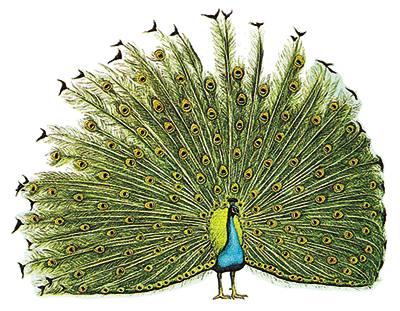
Costly traits have evolved in many species (e.g., the male peacock’s train) because they maximize reproductive success, even though they are survival handicaps. Many of these traits have evolved through nature’s great venture capitalist – sexual selection.

(Source: Vangoghart.org)

Certain harmful mental disorders in humans, such as schizophrenia and manic–depression, are often seen as puzzles from an evolutionary perspective. The heritability of those mental disorders and their frequency in the population at various levels of severity suggests that they may have been evolved through selection, yet they often significantly decrease the survival prospects of those afflicted by them (Keller & Miller, 2006; Nesse & Williams, 1994).

The question often asked is why have they evolved at all? Should not they have been eliminated, instead of maintained, by selective forces? It seems that the most straightforward explanation for the existence of certain mental disorders is that they have co-evolved as costs of attractive mental traits. Not all mental disorders, however, can be explained in this way.

The telltale signs of a mental disorder that is likely to be a cost associated with a trait used in mate choice are: (a) many of the individuals afflicted are also found to have an attractive mental trait; and (b) the mental trait in question is comparatively more attractive than other mental traits that have no apparent survival costs associated with them.

The broad category of mental disorders generally referred to as schizophrenia is a good candidate in this respect because:
    - Its incidence in human males is significantly correlated with creative intelligence, the type of intelligence generally displayed by successful artists, which is an attractive mental trait (Miller & Tal, 2007; Nettle, 2006b).
    - Creative intelligence is considered to be one of the most attractive mental traits in human males, to the point of females at the peak of their fertility cycles finding creative but poor males significantly more attractive than uncreative but wealthy ones (Haselton & Miller, 2006).

The same generally applies to manic–depression, and a few other related mental disorders.

By the way, creative intelligence is also strongly associated with openness, one of the "big five" personality traits. And, both creative intelligence and mental disorders are seen in men and women. This is so even though it is most likely that selection pressure for creative intelligence was primarily exerted by ancestral women on men, not ancestral men on women.

Crespi (2006), in a response to a thorough and provocative argument by Keller & Miller (2006) regarding the evolutionary bases of mental disorders, makes a point that is similar to the one made above (see, also, Nettle, 2006), and also notes that schizophrenia has a less debilitating effect on human females than males.

Ancestral human females, due to their preference for males showing high levels of creative intelligence, might have also selected a co-evolved cost that affects not only males but also the females themselves though gene correlation between the sexes (Gillespie, 2004; Maynard Smith, 1998).

There is another reason why ancestral women might have possessed certain traits that they selected for in ancestral men. Like anything that involves intelligence in humans, the sex applying selection pressure (i.e., female) must be just as intelligent as (if not more than) the sex to which selection pressure is applied (i.e., males). Peahens do not have to have big and brightly colored trains to select male peacocks that have them. That is not so with anything that involves intelligence (in any of its many forms, like creative and interpersonal intelligence), because intelligence must be recognized through communication and behavior, which itself requires intelligence.

Other traits that differentiate females from males may account for differences in the actual survival cost of schizophrenia in females and males. For example, males show a greater propensity toward risk-taking than females (Buss, 1999; Miller, 2000), and schizophrenia may positively moderate the negative relationship between risk-taking propensity and survival success.

Why were some of our ancestors in the Stone Age artists, creating elaborate cave paintings, sculptures, and other art forms? Maybe because a combination of genetic mutations and environmental factors made it a sexy thing to do from around 50,000 years ago or so, even though the underlying reason why the ancestral artists produced art may also have increased the chances that some of them suffered from mental disorders.

A heritable trait possessed by males and perceived as very sexy by females has a very good chance of evolving in any population. That is so even if the trait causes the males who possess it to die much earlier than other males. In the human species, a male can father literally hundreds of children in just a few years. Unlike men, women tend to be very selective of their sexual partners, which does not mean that they cannot all select the same partner (Buss, 1999).

So, if this is true, what is the practical value of knowing it?

It seems reasonable to believe that knowing the likely source of a strange and unpleasant view of the world is, in and of itself, therapeutic. A real danger, it seems, is in seeing the world in a strange and unpleasant way (e.g., as a schizophrenic may see it), and not knowing that the distorted view is caused by an underlying reason. The stress coming from this lack of knowledge may compound the problem; the symptoms of mental disorders are often enhanced by stress.

As one seeks professional help, it may also be comforting to know that something that is actually very good, like creative intelligence, may come together with the bad stuff.

Finally, is it possible that our modern diets and lifestyles significantly exacerbate the problem? The answer is "yes", and this is a theme that has been explored many times before by Emily Deans. (See also this post, by Emily, on the connection between mental disorders and creativity.)

Reference
(All cited references are listed in the article below. If you like mathematics, this article is for you.)

Kock, N. (2011). A mathematical analysis of the evolution of human mate choice traits: Implications for evolutionary psychologists. Journal of Evolutionary Psychology, 9(3), 219-247.

Monday, August 29, 2011

Men who are skinny-fat: There are quite a few of them

The graph below (from Wikipedia) plots body fat percentage (BF) against body mass index (BMI) for men. The data is a bit old: 1994. The top-left quadrant refers to men with BF greater than 25 percent and BMI lower than 25. A man with a BF greater than 25 has crossed into obese territory, even though a BMI lower than 25 would suggest that he is not even overweight. These folks are what we could call skinny-fat men.


The data is from the National Health and Nutrition Examination Survey (NHANES), so it is from the USA only. Interesting that even though this data is from 1994, we already could find quite a few men with more than 25 percent BF and a BMI of around 20. One example of this would be a man who is 5’11’’, weighing 145 lbs, and who would be technically obese!

About 8 percent of the entire sample of men used as a basis for the plot fell into the area defined by the top-left quadrant – the skinny-fat men. (That quadrant is one in which the BMI measure is quite deceiving; another is the bottom-right quadrant.) Most of us would be tempted to conclude that all of these men were sick or on the path to becoming so. But we do not know this for sure. On the standard American diet, I think it is a reasonably good guess that these skinny-fat men would not fare very well.

What is most interesting for me regarding this data, which definitely has some measurement error built in (e.g., zero BF), is that it suggests that the percentage of skinny-fat men in the general population is surprisingly high. (And this seems to be the case for women as well.) Almost too high to characterize being skinny-fat as a disease per se, much less a genetic disease. Genetic diseases tend to be rarer.

In populations under significant natural selection pressure, which does not include modern humans living in developed countries, genetic diseases tend to be wiped out by evolution. (The unfortunate reality is that modern medicine helps these diseases spread, although quite slowly.)  Moreover, the prevalence of diabetes in the population was not as high as 8 percent in 1994, and is not that high today either; although it tends to be concentrated in some areas and cluster with obesity as defined based on both BF and BMI.

And again, who knows, maybe these folks (the skinny-fat men) were not even the least healthy in the whole sample, as one may be tempted to conclude.

Maybe being skinny-fat is a trait, passed on across generations, not a disease. Maybe such a trait was useful at some point in the not so distant past to some of our ancestors, but leads to degenerative diseases in the context of a typical Western diet. Long-living Asians with low BMI tend to gravitate more toward the skinny-fat quadrant than many of their non-Asian counterparts. That is, long-living Asians generally tend have higher BF percentage at the same BMI (see a discussion about the Okinawans on this post).

Evolution is a deceptively simple process, which can lead to very odd results.

This “trait-not-disease” idea may sound like semantics, but it has major implications. It would mean that many of the folks who are currently seen as diseased or disease-prone, are in fact simply “different”. At a point in time in our past, under a unique set of circumstances, they might have been the ones who would have survived. The ones who would have been perceived as healthier than average.

Monday, March 14, 2011

We share an ancestor who probably lived no more than 640 years ago

We all evolved from one single-celled organism that lived billions of years ago. I don’t see why this is so hard for some people to believe, given that all of us also developed from a single fertilized cell in just 9 months.

However, our most recent common ancestor is not that first single-celled organism, nor is it the first Homo sapiens, or even the first Cro-Magnon.

The majority of the people who read this blog probably share a common ancestor who lived no more than 640 years ago.

You and I, whoever you are, have each two parents. Each of our parents have (or had) two parents, who themselves had two parents. And so on.

If we keep going back in time, and assume that you and I do not share a common ancestor, there will be a point where the theoretical world population would have to be impossibly large.

Assuming a new generation coming up every 20 years, and going backwards in time, we get a theoretical population chart like the one below. The theoretical population grows in an exponential, or geometric, fashion.


As we move back in time the bars go up in size. Beyond a certain point their sizes go up so fast that you have to segment the chart. Otherwise the bars on the left side of the chart disappear in comparison to the ones on the right side (as several did on the chart above). Below is the section of the chart going back to the year 1371.


The year 1371 is a mere 640 years ago. And what is the theoretical population in that year if we assume that you and I have no common ancestors? The answer is: more than 8.5 billion people. We know that is not true.

Admittedly this is a somewhat simplistic view of this phenomenon, used here primarily to make a point. For example, it is possible that a population of humans became isolated 15 thousand years ago, remained isolated to the present day, and that one of their descendants just happened to be around reading this blog today.

Perhaps the most widely cited article discussing this idea is this one by Joseph T. Chang, published in the journal Advances in Applied Probability. For a more accessible introduction to the idea, see this article by Joe Kissell.

Estimates vary based on the portion of the population considered. There are also assumptions that have to be made based on migration and mating patterns, as well as the time for each generation to emerge and the stability of that number over time.

Still, most people alive today share a common ancestor who lived a lot more recently than they think. In most cases that common ancestor probably lived less than 640 years ago.

And who was that common ancestor? That person was probably a man who, due to a high perceived social status, had many consorts, who gave birth to many children. Someone like Genghis Khan.

Monday, January 10, 2011

How come evolution hasn’t made us immortal? Death, like sex, helps animal populations avoid extinction

Genes do not evolve, nor do traits that are coded for our genes. We say that they evolve to facilitate discourse, which is alright. Populations evolve. A new genotype appears in a population and then either spreads or disappears. If it spreads, then the population is said to be evolving with respect to that genotype. A genotype may spread to an entire population; in population genetics, this is called “fixation”.

(Human chromosomes capped by telomeres, the white areas at the ends. Telomere shortening is caused by oxidative stress, and seems to be associated with death of cells and organisms. Source: Wikipedia.)

Asexual reproduction is very uncommon among animals. The most accepted theory to explain this is that animal populations live in environments that change very quickly, and thus need a great deal of genetic diversity within them to cope with the change. Otherwise they disappear, and so do their genes. Asexual reproduction leads to dramatically less genetic diversity in populations than sexual reproduction.

Asexual reproduction is similar to cloning. Each new individual looks a lot like its single parent. This does not work well in populations where individuals live relatively long lives. And even 1 year may be too long in this respect. It is just too much time to wait for a possible new mutation that will bring in some genetic diversity. To complicate matters, genetic mutation does not occur very often, and most genetic mutations are neutral with respect to the phenotype (i.e., they don’t code for any trait).

This is not so much of a problem for species whose members reproduce extremely fast; e.g., produce a new generation in less than 1 hour. A fast-reproducing species usually has a short lifespan as well. Accordingly, asexual reproduction is common among short-lived and fast-reproducing unicellular organisms and pathogens that have no cell structure like viruses.

Bacteria and viruses, in particular, form a part of the environment in which animals live that require animal populations to have a large amount of genetic diversity. Animal populations with low genetic diversity are unlikely to be able to cope with the barrage of diseases caused by these fast-mutating parasites.

We make sex chiefly because of the parasites.

And what about death? What does it bring to the table for a population?

Let us look at the other extreme – immortality. Immortality is very problematic in evolutionary terms because a population of immortal individuals would quickly outgrow its resources. That would happen too fast for the population to evolve enough intelligence to be able to use resources beyond those that were locally available.

In this post I assume that immortality is not the same as indestructibility. Here immortality is equated to the absence of aging as we know it. In this sense, immortals can still die by accident or due to disease. They simply do not age. For immortals, susceptibility to disease does not go up with age.

One could argue that a population of immortal individuals who did not reproduce would have done just fine. But that is not correct, because in this case immortality would be akin to cloning, but worse. Genetic diversity would not grow, as no mutations would occur. The fixed population of immortals would be unable to cope with fast-mutating parasites.

There is so much selection pressure against immortality in nature that it is no surprise that animals of very few species live more than 60 years on average. Humans are at the high end of the longevity scale. They are there for a few reasons. One is that our ancestors had offspring that required extra care, which led to an increase in the parents’ longevity. The offspring required extra care chiefly because of their large brains.

That increase in longevity was likely due to genetic mutations that helped our ancestors extend a lifespan that was programmed to be relatively short. Immortality is not a sound strategy for population survival, and thus there are probably many mechanisms through which it is prevented.

Death is evolution’s main ally. Sex is a very good helper. Both increase genetic diversity in populations.

We can use our knowledge of evolution to live better today. The aging clock can be slowed significantly via evolutionarily sound diet and lifestyle changes, essentially because some of our modern diet and lifestyle choices accelerate aging a lot. But diet and lifestyle changes probably will not make people live to 150.

If we want to become immortal, as we understand it in our current human form, ultimately we may want to beat evolution. In this sense, only very intelligent beings can become immortal.

Maybe we can achieve that by changing our genes, or by learning how to transfer our consciousness “software” into robots. In doing so, however, we may become something different; something that is not human and thus doesn’t see things in the same way as a human does. A conscious robot, without the hormones that so heavily influence human behavior, may find that being alive is pointless.

There is another problem. What if the only natural way to achieve some form of immortality is through organic death, but in a way that we don’t understand? This is not a matter of faith or religion. There are many things that we don’t know for sure. This is probably the biggest mystery of all; one that we cannot unravel in our current human state.

Thursday, December 16, 2010

Maknig to mayn tipos? Myabe ur teh boz

Undoubtedly one of the big differences between life today and in our Paleolithic past is the level of stress that modern humans face on a daily basis. Much stress happens at work, which is very different from what our Paleolithic ancestors would call work. Modern office work, in particular, would probably be seen as a form of slavery by our Paleolithic ancestors.

Some recent research suggests that organizational power distance is a big factor in work-related stress. Power distance is essentially the degree to which bosses and subordinates accept wide differences in organizational power between them (Hofstede, 2001).

(Source: talentedapps.wordpress.com)

I have been studying the topic of information overload for a while. It is a fascinating topic. People who experience it have the impression that they have more information to process than they can handle. They also experience significant stress as a result of it, and both the quality of their work and their productivity goes down.

Recently some colleagues and I conducted a study that included employees from companies in New Zealand, Spain, and the USA (Kock, Del Aguila-Obra & Padilla-Meléndez, 2009). These are countries whose organizations typically display significant differences in power distance. We found something unexpected. Information overload was much more strongly associated with power distance than with the actual amount of information employees had to process on a daily basis.

While looking for explanations to this paradoxical finding, I recalled an interview I gave way back in 2001 to the Philadelphia Inquirer, commenting on research by Dr. David A. Owens. His research uncovered an interesting phenomenon. The higher up in the organizational pecking order one was, the less the person was concerned about typos on emails to subordinates.

There is also some cool research by Carlson & Davis (1998) suggesting that bosses tend to pick the communication media that are the most convenient for them, and don’t care much about convenience for the subordinates. One example would be calling a subordinate on the phone to assign a task, and then demanding a detailed follow-up report by email.

As a side note, writing a reasonably sized email takes a lot longer than conveying the same ideas over the phone or face-to-face (Kock, 2005). To be more precise, it takes about 10 times longer when the word count is over 250 and the ideas being conveyed are somewhat complex. For very short messages, a written medium like email is fairly convenient, and the amount of time to convey ideas may be even shorter than by using the phone or doing it face-to-face.

So a picture started to emerge. Bosses choose the communication media that are convenient for them when dealing with subordinates. If the media are written, they don’t care about typos at all. The subordinates use the media that are imposed on them, and if the media are written they certainly don’t want something with typos coming from them to reach their bosses. It would make them look bad.

The final result is this. Subordinates experience significant information overload, particularly in high power distance organizations. They also experience significant stress. Work quality and productivity goes down, and they get even more stressed. They get fat, or sickly thin. Their health deteriorates. Eventually they get fired, which doesn’t help a bit.

What should you do, if you are not the boss? Here are some suggestions:

- Try to tactfully avoid letting communication media being imposed on you all the time by your boss (and others). Explicitly state, in a polite way, the media that would be most convenient for you in various circusmtances, both as a receiver and sender. Generally, media that support oral speech are better for discussing complex ideas. Written media are better for short exchanges. Want an evolutionary reason for that? As you wish: Kock (2004).

- Discuss the ideas in this post with your boss; assuming that the person cares. Perhaps there is something that can be done to reduce power distance, for example. Making the work environment more democratic seems to help in some cases.

- And ... dot’n wrory soo mach aobut tipos ... which could be extrapolated to: don’t sweat the small stuff. Most bosses really care about results, and will gladly take an email with some typos telling them that a new customer signed a contract. They will not be as happy with an email telling them the opposite, no matter how well written it is.

Otherwise, your organizational demise may come sooner than you think.

References

Carlson, P.J., & Davis, G.B. (1998). An investigation of media selection among directors and managers: From "self" to "other" orientation. MIS Quarterly, 22(3), 335-362.

Hofstede, G. (2001). Culture’s consequences: Comparing values, behaviors, institutions, and organizations across nations. Thousand Oaks, CA: Sage.

Kock, N. (2004). The psychobiological model: Towards a new theory of computer-mediated communication based on Darwinian evolution. Organization Science, 15(3), 327-348.

Kock, N. (2005). Business process improvement through e-collaboration: Knowledge sharing through the use of virtual groups. Hershey, PA: Idea Group Publishing.

Kock, N., Del Aguila-Obra, A.R., & Padilla-Meléndez, A. (2009). The information overload paradox: A structural equation modeling analysis of data from New Zealand, Spain and the U.S.A. Journal of Global Information Management, 17(3), 1-17.

Monday, November 22, 2010

Human traits are distributed along bell curves: You need to know yourself, and HCE can help

Most human traits (e.g., body fat percentage, blood pressure, propensity toward depression) are influenced by our genes; some more than others. The vast majority of traits are also influenced by environmental factors, the “nurture” part of the “nature-nurture” equation. Very few traits are “innate”, such as blood type.

This means that manipulating environmental factors, such as diet and lifestyle, can strongly influence how the traits are finally expressed in humans. But each individual tends to respond differently to diet and lifestyle changes, because each individual is unique in terms of his or her combination of “nature” and “nurture”. Even identical twins are different in that respect.

When plotted, traits that are influenced by our genes are distributed along a bell-shaped curve. For example, a trait like body fat percentage, when measured in a population of 1000 individuals, will yield a distribution of values that will look like a bell-shaped distribution. This type of distribution is also known in statistics as a “normal” distribution.

Why is that?

The additive effect of genes and the bell curve

The reason is purely mathematical. A measurable trait, like body fat percentage, is usually influenced by several genes. (Sometimes individual genes have a very marked effect, as in genes that “switch on or off” other genes.) Those genes appear at random in a population, and their various combinations spread in response to selection pressures. Selection pressures usually cause a narrowing of the bell-shaped curve distributions of traits in populations.

The genes interact with environmental influences, which also have a certain degree of randomness. The result is a massive combined randomness. It is this massive randomness that leads to the bell-curve distribution. The bell curve itself is not random at all, which is a fascinating aspect of this phenomenon. From “chaos” comes “order”. A bell curve is a well-defined curve that is associated with a function, the probability density function.

The underlying mathematical reason for the bell shape is the central limit theorem. The genes are combined in different individuals as combinations of alleles, where each allele is a variation (or mutation) of a gene. An allele set, for genes in different locations of the human DNA, forms a particular allele combination, called a genotype. The alleles combine their effects, usually in an additive fashion, to influence a trait.

Here is a simple illustration. Let us say one generates 1000 random variables, each storing 10 random values going from 0 to 1. Then the values stored in each of the 1000 random variables are added. This mimics the additive effect of 10 genes with random allele combinations. The result are numbers ranging from 1 to 10, in a population of 1000 individuals; each number is analogous to an allele combination. The resulting histogram, which plots the frequency of each allele combination (or genotype) in the population, is shown on the figure bellow. Each allele configuration will “push for” a particular trait range, making the trait distribution also have the same bell-shaped form.


The bell curve, research studies, and what they mean for you

Studies of the effects of diet and exercise on health variables usually report their results in terms of average responses in a group of participants. Frequently two groups are used, one control and one treatment. For example, in a diet-related study the control group may follow the Standard American Diet, and the treatment group may follow a low carbohydrate diet.

However, you are not the average person; the average person is an abstraction. Research on bell curve distributions tells us that there is about a 68 percentage chance that you will fall within a 1 standard deviation from the average, to the left or the right of the “middle” of the bell curve. Still, even a 0.5 standard deviation above the average is not the average. And, there is approximately a 32 percent chance that you will not be within the larger -1 to 1 standard deviation range. If this is the case, the average results reported may be close to irrelevant for you.

Average results reported in studies are a good starting point for people who are similar to the studies’ participants. But you need to generate your own data, with the goal of “knowing yourself through numbers” by progressively analyzing it. This is akin to building a “numeric diary”. It is not exactly an “N=1” experiment, as some like to say, because you can generate multiple data points (e.g., N=200) on how your body alone responds to diet and lifestyle changes over time.

HealthCorrelator for Excel (HCE)

I think I have finally been able to develop a software tool that can help people do that. I have been using it myself for years, initially as a prototype. You can see the results of my transformation on this post. The challenge for me was to generate a tool that was simple enough to use, and yet powerful enough to give people good insights on what is going on with their body.

The software tool is called HealthCorrelator for Excel (HCE). It runs on Excel, and generates coefficients of association (correlations, which range from -1 to 1) among variables and graphs at the click of a button.

This 5-minute YouTube video shows how the software works in general, and this 10-minute video goes into more detail on how the software can be used to manage a specific health variable. These two videos build on a very small sample dataset, and their focus is on HDL cholesterol management. Nevertheless, the software can be used in the management of just about any health-related variable – e.g., blood glucose, triglycerides, muscle strength, muscle mass, depression episodes etc.

You have to enter data about yourself, and then the software will generate coefficients of association and graphs at the click of a button. As you can see from the videos above, it is very simple. The interpretation of the results is straightforward in most cases, and a bit more complicated in a smaller number of cases. Some results will probably surprise users, and their doctors.

For example, a user who is a patient may be able to show to a doctor that, in the user’s specific case, a diet change influences a particular variable (e.g., triglycerides) much more strongly than a prescription drug or a supplement. More posts will be coming in the future on this blog about these and other related issues.

Friday, August 13, 2010

The evolution of costly traits: Competing for women can be unhealthy for men

There are human traits that evolved in spite of being survival handicaps. These counterintuitive traits are often called costly traits, or Zahavian traits (in animal signaling contexts), in honor of the evolutionary biologist Amotz Zahavi (Zahavi & Zahavi, 1997). I have written a post about this type of traits, and also an academic article (Kock, 2009). The full references and links to these publications are at the end of this post.

The classic example of costly trait is the peacock’s train, which is used by males to signal health to females. (Figure below from: animals.howstuffworks.com.) The male peacock’s train (often incorrectly called “tail”) is a costly trait because it impairs the ability of a male to flee predators. It decreases a male’s survival success, even though it has a positive net effect on the male’s reproductive success (i.e., the number of offspring it generates). It is used in sexual selection; the females find big and brightly colored trains with many eye spots "sexy".


So costly traits exist in many species, including the human species, but we have not identified them all yet. The implication for human diet and lifestyle choices is that our ancestors might have evolved some habits that are bad for human survival, and moved away from others that are good for survival. And I am not only talking about survival among modern humans; I am talking about survival among our human ancestors too.

The simple reason for the existence of costly traits in humans is that evolution tends to maximize reproductive success, not survival, and that applies to all species. (Inclusive fitness theory goes a step further, placing the gene at the center of the selection process, but this is a topic for another post.) If that were not the case, rodent species, as well as other species that specialize in fast reproduction within relatively short life spans, would never have evolved.

Here is an interesting piece of news about research done at the University of Michigan. (I have met the lead researcher, Dan Kruger, a couple of times at HBES conferences. My impression is that his research is solid.) The research illustrates the evolution of costly traits, from a different angle. The researchers argue, based on the results of their investigation, that competing for a woman’s attention is generally bad for a man’s health!

Very romantic ...

References:

Kock, N. (2009). The evolution of costly traits through selection and the importance of oral speech in e-collaboration. Electronic Markets, 19(4), 221-232.

Zahavi, A. & Zahavi, A. (1997). The Handicap Principle: A missing piece of Darwin’s puzzle. Oxford, England: Oxford University Press.

Saturday, August 7, 2010

Cortisol, surprise-enhanced cognition, and flashbulb memories: Scaring people with a snake screen and getting a PhD for it!

Cortisol is a hormone that has a number of important functions. It gets us out of bed in the morning, it cranks up our metabolism in preparation for intense exercise, and it also helps us memorize things and even learn. Yes, it helps us learn. Memorization in particular, and cognition in general, would be significantly impaired without cortisol. When you are surprised, particularly with something unpleasant, cortisol levels increase and enhance cognition. This is in part what an interesting study suggests; a study in which I was involved. The study was properly “sanctified” by the academic peer-review process (Kock et al., 2009; full reference and link at the end of this post).

The main hypothesis tested through this study is also known as the “flashbulb memorization” hypothesis. Interestingly, up until this study was conducted no one seemed to have used evolution to provide a basis on which flashbulb memorization can be explained. The basic idea here is that enhanced cognition within the temporal vicinity of animal attacks (i.e., a few minutes before and after) allowed our hominid ancestors to better build and associate memories related to the animals and their typical habitat markers (e.g., vegetation, terrain, rock formations), which in turn increased their survival chances. Their survival chances increased because the memories helped them avoid a second encounter; if they survived the first, of course. And so flashbulb memorization evolved. (In fact, it might have evolved earlier than at the hominid stage, and it may also have evolved in other species.)

The study involved 186 student participants. The participants were asked to review web-based learning modules and subsequently take a test on what they had learned. Data from 6 learning modules in 2 experimental conditions were contrasted. In the treatment condition a web-based screen with a snake in attack position was used to surprise the participants; the snake screen was absent in the control condition. See schematic figure below (click on it to enlarge). The “surprise zone” in the figure comprises the modules immediately before and after the snake screen (modules 3 and 4); those are the modules in which higher scores were predicted.


The figure below (click on it to enlarge) shows a summary of the results. The top part of the figure shows the percentage differences between average scores obtained by participants in the treatment and control conditions. The bottom part of the figure shows the average scores obtained by participants in both conditions, as well as the scores that the participants would have obtained by chance. The chance scores would likely have been the ones obtained by the participants if their learning had been significantly impaired for any of the modules; this could have happened due to distraction, for example. As you can see, the scores for all modules are significantly higher than chance.


In summary, the participants who were surprised with the snake screen obtained significantly higher scores for the two modules immediately before (about 20 percent higher) and after (about 40 percent higher) the snake screen. The reason is that the surprise elicited by the snake screen increased cortisol levels, which in turn improved learning for modules 3 and 4. Adrenaline and noradrenaline (epinephrine and norepinephrine) may also be involved. This phenomenon is so odd that it seems to defy the laws of physics; note that Module 3 was reviewed before the snake screen. And, depending on the size of a test, this could have turned a “C” into an “A” grade!

Similarly, it is because of this action of cortisol that Americans reading this post, especially those who lived in the East Coast in 2001, remember vividly where they were, what they were doing, and who they were with, when they first heard about the September 11, 2001 Attacks. I was living in Philadelphia at the time, and I remember those details very vividly, even though the Attacks happened almost 10 years ago. That is one of the fascinating things that cortisol does; it instantaneously turns short-term contextual memories temporally associated with a surprise event (i.e., a few minutes before and after the event) into vivid long-term memories.

This study was part of the PhD research project of one of my former doctoral students, and now Dr. Ruth Chatelain-Jardon. Her PhD was granted in May 2010. She expanded the study through data collection in two different countries, and a wide range of analyses. (It is not that easy to get a PhD!) Her research provides solid evidence that flashbulb memorization is a real phenomenon, and also that it is a human universal. Thanks are also due to Dr. Jesus Carmona, another former doctoral student of mine who worked on a different PhD research project, but who also helped a lot with this project.

Reference:

Kock, N., Chatelain-Jardón, R., & Carmona, J. (2009). Scaring them into learning!? Using a snake screen to enhance the knowledge transfer effectiveness of a web interface. Decision Sciences Journal of Innovative Education, 7(2), 359-375.

Thursday, July 8, 2010

Our body’s priority is preventing hypoglycemia, not hyperglycemia

An adult human has about 5 l of blood in circulation. Considering a blood glucose concentration of 100 mg/dl, this translates into a total amount of glucose in the blood of about 5 g (5 l x 0.1 g / 0.1 l). That is approximately a teaspoon of glucose. If a person’s blood glucose goes down to about half of that, the person will enter a state of hypoglycemia. Severe and/or prolonged hypoglycemia can cause seizures, comma, and death.

In other words, the disappearance of about 2.5 g of glucose from the blood will lead to hypoglycemia. Since 2.5 g of glucose yields about 10 calories, it should be easy to see that it does not take much to make someone hypoglycemic in the absence of compensatory mechanisms. An adult will consume on average 6 to 9 times as many calories just sitting quietly, and a proportion of those calories will come from glucose.

While hypoglycemia has severe negative health effects in the short term, including the most severe of all - death, hyperglycemia has primarily long-term negative health effects. Given this, it is no surprise that our body’s priority is to prevent hypoglycemia, not hyperglycemia.

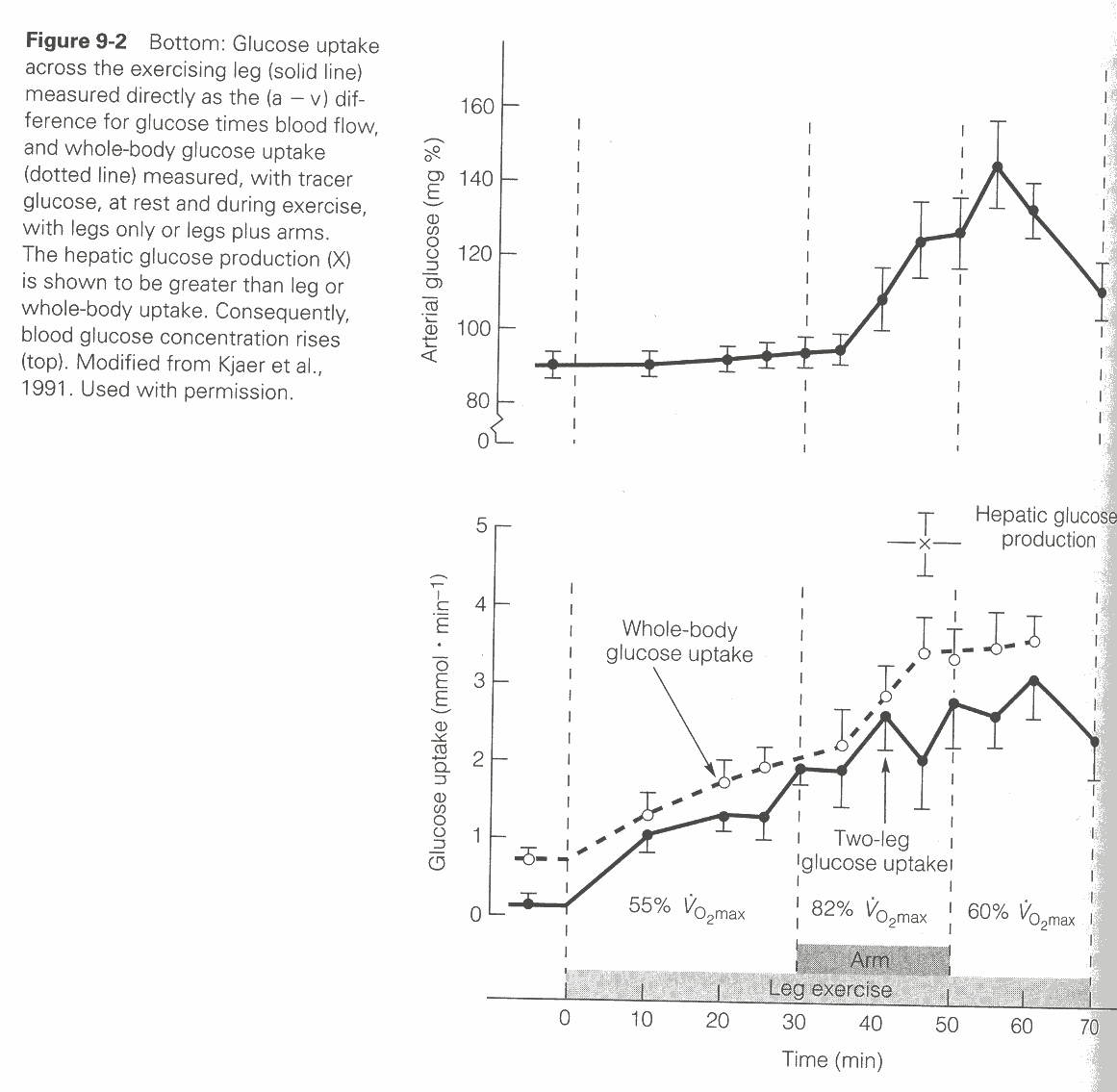
The figure below, from the outstanding book by Brooks and colleagues (2005), shows two graphs. The graph at the top shows the variation of arterial glucose in response to exercise. The graph at the bottom shows the variation of whole-body and muscle glucose uptake, plus hepatic glucose production, in response to exercise. The full reference to the Brooks and colleagues book is at the end of this post.


Note how blood glucose increases dramatically as the intensity of the exercise session increases, which means that muscle tissue consumption of glucose is also increasing. This is particularly noticeable as arm exercise is added to leg exercise, bringing the exercise intensity to 82 percent of maximal capacity. This blood glucose elevation is similar to the elevation one would normally see in response to all-out sprinting and weight training within the anaerobic range (with enough weight to allow only 6 to 12 repetitions, or a time under tension of about 30 to 70 seconds).

The dashed line at the bottom graph represents whole-body glucose uptake, including what would be necessary for the body to function in the absence of exercise. This is why whole-body glucose uptake is higher than muscle glucose uptake induced by exercise; the latter was measured through a glucose tracing method. The top of the error bars above the points on the dashed line represent hepatic glucose production, which is always ahead of whole-body glucose uptake. This is our body doing what it needs to do to prevent hypoglycemia.

One point that is important to make here is that at the beginning of an anaerobic exercise session muscle uses up primarily local glycogen stores (not liver glycogen stores), and can completely deplete them in a very localized fashion. Muscle glycogen stores add up to 500 g, but intense exercise depletes glycogen stores locally, only within the muscles being used. Still, muscle glycogen use generates lactate as a byproduct, which is then used by the liver to produce glucose (gluconeogenesis) to prevent hypoglycemia. The liver also makes some glycogen (glycogenesis) during this time. This means that it is not only pre-exercise liver glycogen that is being used to maintain blood glucose levels above whole-body glucose uptake. This makes sense, since the liver stores only about 100 g of glycogen.

The need to prevent hypoglycemia at all costs is the main reason why there are several hormones that increase blood glucose, while apparently there is only one that decreases blood glucose. Examples of hormones that increase blood glucose are cortisol, adrenaline, noradrenaline, growth hormone, and, notably, glucagon. The only hormone that decreases blood glucose levels in a significant way is insulin. These hormones do not increase or decrease blood glucose directly; they signal to various tissues to either secrete or absorb glucose.

Evolution typically prioritizes processes that have a higher impact on reproductive success, and one must be alive to successfully reproduce. Hypoglycemia causes death. Often those processes that have a significant effect on reproductive success rely on redundant mechanisms. So our evolved mechanisms to deal with hypoglycemia are redundant. Evolution is not an engineer; it is a tinkerer!

What about hyperglycemia – doesn’t it cause death? Well, not in the short term, so related selection pressures were fairly small compared to those associated with hypoglycemia. Besides, there were no foods rich in refined carbohydrates and sugars in the Paleolithic - e.g., white bread, bagels, doughnuts, pasta, cereals, fruit juices, regular sodas, table sugar. Those are the foods that contribute the most to hyperglycemia.

Reference:

Brooks, G.A., Fahey, T.D., & Baldwin, K.M. (2005). Exercise physiology: Human bioenergetics and its applications. Boston, MA: McGraw-Hill.

Wednesday, June 23, 2010

Compensatory adaptation as a unifying concept: Understanding how we respond to diet and lifestyle changes

Trying to understand each body response to each diet and lifestyle change, individually, is certainly a losing battle. It is a bit like the various attempts to classify organisms that occurred prior to solid knowledge about common descent. Darwin’s theory of evolution is a theory of common descent that makes classification of organisms a much easier and logical task.

Compensatory adaptation (CA) is a broad theoretical framework that hopefully can help us better understand responses to diet and lifestyle changes. CA is a very broad idea, and it has applications at many levels. I have discussed CA in the context of human behavior in general (Kock, 2002), and human behavior toward communication technologies (Kock, 2001; 2005; 2007). Full references and links are at the end of this post.

CA is all about time-dependent adaptation in response to stimuli facing an organism. The stimuli may be in the form of obstacles. From a general human behavior perspective, CA seems to be at the source of many success stories. A few are discussed in the Kock (2002) book; the cases of Helen Keller and Stephen Hawking are among them.

People who have to face serious obstacles sometimes develop remarkable adaptations that make them rather unique individuals. Hawking developed remarkable mental visualization abilities, which seem to be related to some of his most important cosmological discoveries. Keller could recognize an approaching person based on floor vibrations, even though she was blind and deaf. Both achieved remarkable professional success, perhaps not as much in spite but because of their disabilities.

From a diet and lifestyle perspective, CA allows us to make one key prediction. The prediction is that compensatory body responses to diet and lifestyle changes will occur, and they will be aimed at maximizing reproductive success, but with a twist – it’s reproductive success in our evolutionary past! We are stuck with those adaptations, even though we live in modern environments that differ in many respects from the environments where our ancestors lived.

Note that what CA generally tries to maximize is reproductive success, not survival success. From an evolutionary perspective, if an organism generates 30 offspring in a lifetime of 2 years, that organism is more successful in terms of spreading its genes than another that generates 5 offspring in a lifetime of 200 years. This is true as long as the offspring survive to reproductive maturity, which is why extended survival is selected for in some species.

We live longer than chimpanzees in part because our ancestors were “good fathers and mothers”, taking care of their children, who were vulnerable. If our ancestors were not as caring or their children not as vulnerable, maybe this blog would have posts on how to control blood glucose levels to live beyond the ripe old age of 50!

The CA prediction related to responses aimed at maximizing reproductive success is a straightforward enough prediction. The difficult part is to understand how CA works in specific contexts (e.g., Paleolithic dieting, low carbohydrate dieting, calorie restriction), and what we can do to take advantage (or work around) CA mechanisms. For that we need a good understanding of evolution, some common sense, and also good empirical research.

One thing we can say with some degree of certainty is that CA leads to short-term and long-term responses, and that those are likely to be different from one another. The reason is that a particular diet and lifestyle change affected the reproductive success of our Paleolithic ancestors in different ways, depending on whether it was a short-term or long-term change. The same is true for CA responses at different stages of one’s life, such as adolescence and middle age; they are also different.

This is the main reason why many diets that work very well in the beginning (e.g., first months) frequently cease to work as well after a while (e.g., a year).

Also, CA leads to psychological responses, which is one of the key reasons why most diets fail. Without a change in mindset, more often than not one tends to return to old habits. Hunger is not only a physiological response; it is also a psychological response, and the psychological part can be a lot stronger than the physiological one.

It is because of CA that a one-month moderately severe calorie restriction period (e.g., 30% below basal metabolic rate) will lead to significant body fat loss, as the body produces hormonal responses to several stimuli (e.g., glycogen depletion) in a compensatory way, but still “assuming” that liberal amounts of food will soon be available. Do that for one year and the body will respond differently, “assuming” that food scarcity is no longer short-term and thus that it requires different, and possibly more drastic, responses.

Among other things, prolonged severe calorie restriction will lead to a significant decrease in metabolism, loss of libido, loss of morale, and physical as well as mental fatigue. It will make the body hold on to its fat reserves a lot more greedily, and induce a number of psychological responses to force us to devour anything in sight. In several people it will induce psychosis. The results of prolonged starvation experiments, such as the Biosphere 2 experiments, are very instructive in this respect.

It is because of CA that resistance exercise leads to muscle gain. Muscle gain is actually a body’s response to reasonable levels of anaerobic exercise. The exercise itself leads to muscle damage, and short-term muscle loss. The gain comes after the exercise, in the following hours and days (and with proper nutrition), as the body tries to repair the muscle damage. Here the body “assumes” that the level of exertion that caused it will continue in the near future.

If you increase the effort (by increasing resistance or repetitions, within a certain range) at each workout session, the body will be constantly adapting, up to a limit. If there is no increase, adaptation will stop; it will even regress if exercise stops altogether. Do too much resistance training (e.g., multiple workout sessions everyday), and the body will react differently. Among other things, it will create deterrents in the form of pain (through inflammation), physical and mental fatigue, and even psychological aversion to resistance exercise.

CA processes have a powerful effect on one’s body, and even on one’s mind!

References:

Kock, N. (2001). Compensatory Adaptation to a Lean Medium: An Action Research Investigation of Electronic Communication in Process Improvement Groups. IEEE Transactions on Professional Communication, 44(4), 267-285.

Kock, N. (2002). Compensatory Adaptation: Understanding How Obstacles Can Lead to Success. Infinity Publishing, Haverford, PA. (Additional link.)

Kock, N. (2005). Compensatory adaptation to media obstacles: An experimental study of process redesign dyads. Information Resources Management Journal, 18(2), 41-67.

Kock, N. (2007). Media Naturalness and Compensatory Encoding: The Burden of Electronic Media Obstacles is on Senders. Decision Support Systems, 44(1), 175-187.

Thursday, June 17, 2010

Pretty faces are average faces: Genetic diversity and health

Many people think that the prettiest faces are those with very unique features. Generally that is not true. Pretty faces are average faces. And that is not only because they are symmetrical, even though symmetry is an attractive facial trait. Average faces are very attractive, which is counterintuitive but makes sense in light of evolution and genetics.

The faces in the figure below (click to enlarge) are from a presentation I gave at the University of Houston in 2008. The PowerPoint slides file for the presentation is available here. The photos were taken from the German web site Beautycheck.de. This site summarizes a lot of very interesting research on facial attractiveness.


The face on the right is a composite of the two faces on the left. It simulates what would happen if you were to morph the features of the two faces on the left into the face on the right. That is, the face on the right is the result of an “averaging” of the two faces on the left.

If you show these photos to a group of people, like I did during my presentation in Houston, most of the people in the group will say that the face on the right is the prettiest of the three. This happens even though most people will also say that each of the three faces is pretty, if shown each face separately from the others.

Why are average faces more beautiful?

The reason may be that we have brain algorithms that make us associate a sense of “beauty” with features that suggest an enhanced resistance to disease. This is an adaptation to the environments our ancestors faced in our evolutionary past, when disease would often lead to observable distortions of facial and body traits. Average faces are the result of increased genetic mixing, which leads to increased resistance to disease.

This interpretation is a variation of Langlois and Roggman’s “averageness hypothesis”, published in a widely cited 1990 article that appeared in the journal Psychological Science.

By the way, many people think that the main survival threats ancestral humans faced were large predators. I guess it is exciting to think that way; our warrior ancestors survived due to their ability to fight off predators! The reality is that, in our ancestral past, as today, the biggest killer of all by far was disease. The small organisms, the ones our ancestors couldn’t see, were the most deadly.

People from different populations, particularly those that have been subjected to different diseases, frequently carry genetic mutations that protect them from those diseases. Those are often carried as dominant alleles (i.e., variations of a gene). When two people with diverse genetic protections have children, the children inherit the protective mutations of both parents. The more genetic mixing, the more likely it is that multiple protective genetic mutations will be carried. The more genetic mixing, the higher is the "averageness" score of the face.

The opposite may happen when people who share many genes (e.g., cousins) have children. The term for this is inbreeding. Since alleles that code for diseases are often carried in recessive form, a child of closely related parents has a higher chance of having a combination of two recessive disease-promoting alleles. In this case, the child will be homozygous recessive for the disease, which will increase dramatically its chances of developing the disease.

In a nutshell: gene mixing = health; inbreeding = disease.

Finally, if you have some time, make sure to take a look at this page on the Virtual Miss Germany!

Monday, May 24, 2010

Intermittent fasting, engineered foods, leptin, and ghrelin

Engineered foods are designed by smart people, and the goal is not usually to make you healthy; the goal is to sell as many units as possible. Some engineered foods are “fortified” with the goal of making them as healthy as possible. The problem is that food engineers are competing with many millions of years of evolution, and evolution usually leads to very complex metabolic processes. Evolved mechanisms tend to be redundant, leading to the interaction of many particles, enzymes, hormones etc.

Natural foods are not designed to make you eat them nonstop. Animals do not want to be eaten (even these odd-looking birds below). Most plants do not “want” their various nutritious parts to be eaten. Fruits are exceptions, but plants do not want one single individual to eat all their fruits. That compromises seed dispersion. Multiple individual fruit eaters enhance seed dispersion. Plants "want" one individual animal to eat some of their fruits and then move on, so that other individuals can also eat.

(Source: Teamsugar.com)

It is safe to assume that doughnut manufacturers want one single individual to eat as many doughnuts as possible, and many individuals to want to do that. That takes some serious food engineering, and a lot of testing. Success will increase the manufacturers' revenues, the real bottom line for them. The medical establishment will then take care of those individuals, and prolong their miserable lives so that they can continue eating doughnuts for as long as possible. It is self-perpetuating system.

As mentioned in this previous post, to succeed in the practice of intermittent fasting, one has to stop worrying about food, and one good step in that direction is to avoid engineered foods. In this sense, intermittent fasting can be seen as a form of liberation. Doing something enjoyable and forgetting about food. Like children playing outdoors; they do not care as much about food as they do about play. Even sleeping will do; most people forget about eating when they are asleep.

Intermittent fasting as a religious and/or social activity, as in the Great Lent and Ramadan, also seems to work well. Any activity that brings people together with a common goal, especially if the goal is not to do something evil, has a lot of potential for success.

If you approach intermittent fasting as another thing to worry about, then it will be tough – one fast per week, on the same day of the week, from 7.33 pm of one day to 3.17 pm of the next day. I exaggerate a bit. Anyway, if you approach it as another obligation, another modern stressor, you will probably fail in the medium to long term. It is just commonsense. Maybe you will be able to do it for a while, but not for long enough to reap some serious benefits. A few fasts are not going to make you lose a lot of weight; the body will adapt in a compensatory way during the fast, slowing down your metabolism a bit and conserving calories. On top of that, you will feel very, very hungry. That will make you binge when you break your fast. Compensatory adaptation (a very general phenomenon) is something that our body is very good at, regardless of what we want it to do.

From a more pragmatic perspective, for most people it is easier to fast at night and in the morning. Eating a big meal right after you wake up is not a very natural activity; several hormones that promote body fat catabolism are often elevated in the morning, causing mild physiological insulin resistance.

If you have dinner at 7 pm, skip breakfast, and then have brunch the next day at 10 am, you will have fasted for 15 h. If you skip breakfast and brunch, and have lunch at noon the next day, you will have fasted for 17 h.

On the other hand, if you have breakfast at 8 am, skip lunch, and then have dinner at 6 pm, you will have fasted only for 10 h.

Leptin levels seem to go down significantly after 12 h of fasting, leading to increased body fat catabolism and leptin sensitivity. This is a good thing, since leptin resistance seems to frequently precede insulin resistance.

Many people think that skipping breakfast will make them fat, for various reasons, including that being what sumo wrestlers do to put on enormous amounts of body fat. Well, skipping breakfast probably will make people fat if, when they break the fast, they stuff themselves to the point of almost throwing up, combine plenty of easily digestible carbohydrates (e.g., multiple bowls of rice) with a lot of dietary fat, and then go to sleep. That is what sumo wrestlers normally do.

Eating fat is great, but not together with lots of easily digestible carbohydrates. Even eating a lot of fat by itself will make it difficult for you to shed enough fat to look like the hunter-gatherers in this post. But your body fat set point will be much lower if you eat a lot of fat by itself than if you eat a lot of fat with a lot of easily digestible carbohydrates.

Anyway, if people skip breakfast and eat what they normally eat at lunch, they will not gain more body fat than they would have if they had breakfast. If they do anything to boost their metabolism in the morning, they will most certainly lose body fat in a noticeable way over several weeks, as long as they have enough fat to lose. For example, they can add some light activity in the morning (such as walking), or have a metabolism-boosting drink (e.g., coffee, green tea), or both.

Our hunter-gatherer ancestors, living outdoors, probably spent most of their day performing light activities that involved little stress. Those activities increase metabolism and fat burning, while keeping stress hormone levels at low ranges. Hunger suppression was the result, making intermittent fasting fairly easy.

Again, intermittent fasting should be approached as a form of liberation. You are no longer a slave of food.

It helps staying away from engineered foods as much as possible, because, again, they are usually engineered with food addiction in mind. I am talking primarily about foods rich in refined carbohydrates and sugars. They come in boxes and plastic bags with labels describing calories and macronutrient composition, which are often wrong or misleading.

Let us say we could transport a group of archaic Homo sapiens to a modern city, and feed them white bread, bagels, doughnuts, potato chips industrially fried in vegetable oils, and the like. Would they say “Yuck, how can these people eat this?” No, they would not. It would be heaven for them; they would want nothing else for the rest of their gustatorily happy but health-wise miserable lives.

While practicing intermittent fasting, it is probably a good idea to have fixed meal times, and skipping them from time to time. The reason is the hunger hormone ghrelin, secreted by the stomach (mostly) and pancreas to stimulate hunger and possibly prepare the digestive tract for optimal or quasi-optimal absorption of food. Its secretion appears to follow the pattern of habitual meals adopted by a person.

References:

Elliott, W.H., & Elliott, D.C. (2009). Biochemistry and molecular biology. 4th Edition. New York: NY: Oxford University Press.

Fuhrman, J., & Barnard, N.D. (1995). Fasting and eating for health: A medical doctor's program for conquering disease. New York, NY: St. Martin’s Press.

Friday, May 21, 2010

Atheism is a recent Neolithic invention: Ancestral humans were spiritual people

For the sake of simplicity, this post treats “atheism” as synonymous with “non-spiritualism”. Technically, one can be spiritual and not believe in any deity or supernatural being, although this is not very common. This post argues that atheism is a recent Neolithic invention; an invention that is poorly aligned with our Paleolithic ancestry.

Our Paleolithic ancestors were likely very spiritual people; at least those belonging to the Homo sapiens species. Earlier ancestors, such as the Australopithecines, may have lacked enough intelligence to be spiritual. Interestingly, often atheism is associated with high intelligence and a deep understanding of science. Many well-known, and brilliant, evolution researchers are atheists (e.g., Richard Dawkins).

Well, when we look at our ancestors, spirituality seems to have emerged as a result of increased intelligence.

Spirituality can be seen in cave paintings, such as the one below, from the Chauvet Cave in southern France. The Chauvet Cave is believed to have the earliest known cave paintings, dating back to about 30 to 40 thousand years ago. The painting below is on the cover of the book Dawn of art: The Chauvet Cave. (See the full reference for this publication and others at the end of this post.)


The most widely accepted theory of the origin of cave paintings is that they were used in shamanic or religious rituals. By and large, they were not used to convey information (e.g., as maps); and they are often found deep in caves, in areas that are almost inaccessible, ruling out a “decorative” artistic purpose. As De La Croix and colleagues (1991) note:
Researchers have evidence that the hunters in the caves, perhaps in a frenzy stimulated by magical rites and dances, treated the painted animals as if they were alive. Not only was the quarry often painted as pierced by arrows, but hunters actually may have thrown spears at the images, as sharp gouges in the side of the bison at Niaux suggest.
Niaux is another cave in southern France. Like the Chauvet Cave, it is full of prehistoric paintings. Even though those paintings are believed to be more recent, dating back to the end of the Paleolithic, they follow the same patterns seen almost everywhere in prehistoric art. The patterns point at a life that gravitates around spiritual rituals.

Isolated hunter-gatherers also provide a glimpse at our spiritual Paleolithic past. No isolated hunter-gatherer group has ever been found in which atheism was the predominant belief among its members. In fact, the life of most isolated hunter-gatherer groups that have been studied appears to have revolved around religious rituals. In many of these groups, shamans held a very high social status, and strongly influenced group decisions.

Finally, there is solid empirical evidence from human genetics and the study of modern human groups that: (a) “religiosity” may be coded into our genes, to a larger extent in some individuals than in others; and (b) those who are spiritual, particularly those who belong to a spiritual or religious group, have generally better health and experience lower levels of depression and stress (which likely influence health) than those who do not.

There was once an ape that became smart. It invented weapons, which greatly multiplied the potential for death and destruction of the ape’s natural propensity toward violence; violence often motivated by different religious and cultural beliefs held by different groups. It also invented delicious foods rich in refined carbohydrates and sugars, which slowly poisoned the ape’s body.

Could the recent invention of atheism have been just as unhealthy?

Surely religion has been at the source of conflicts that have caused much death and destruction. But is religion, or spirituality, really to be blamed? Many other factors can lead to a great deal of death and destruction, sometimes directly, other times indirectly – e.g., poverty and illiteracy.

References:

Brown, D.E. (1991). Human universals. New York, NY: McGraw-Hill.

Chauvet, J.M., Deschamps, E.B., & Hillaire, C. (1996). Dawn of art: The Chauvet Cave. New York, NY: Harry N. Abrams.

De La Croix, H., Tansey, R.G., & Kirkpatrick, D. (1991). Gardner’s art through the ages: Ancient, medieval, and non-European art. Philadelphia, PA: Harcourt Brace.

Gombrich, E.H. (2006). The story of art. London, England: Pheidon Press.

Murdock, G.P. (1958). Outline of world cultures. New Haven, CN: Human Relations Area Files Press.

Saturday, May 15, 2010

Intermittent fasting as a form of liberation

I have been doing a lot of reading over the years on isolated hunter-gatherer populations; see three references at the end of this post, all superb sources (Chagnon’s book on the Yanomamo, in particular, is an absolute page turner). I also take every opportunity I have to talk with anthropologists and other researchers who have had field experience with hunter-gatherer groups. Even yesterday I was talking to a researcher who spent many years living among isolated native Brazilian groups in the Amazon.

Maybe I have been reading too much into those descriptions, but it seems to me that one distinctive feature of many adults in hunter-gatherer populations, when compared with adults in urban populations, is that the hunter-gatherers are a lot less obsessed with food.

Interestingly, this seems to be a common characteristic of physically active children. They want to play, and eating is often an afterthought, an interruption of play. Sedentary children, who play indoors, can and often want to eat while they play.

Perhaps adult hunter-gatherers are more like physically active children than adults in modern urban societies. Maybe this is one of the reasons why adult hunter-gatherers have much less body fat. Take a look at the photo below (click to enlarge), from Wikipedia. It was reportedly taken in 1939, and shows three Australian aboriginals.


Hunter-gatherers do not have supermarkets, and active children need food to grow healthy. Adult urbanites have easy access to an abundance of food in supermarkets, and they do not need food to grow, at least not vertically.

Still, adult hunter-gatherers and children who are physically active are generally much less concerned about food than adults in modern urban societies.

It seems illogical, a bit like a mental disorder of some sort that has been plaguing adults in modern urban societies. A mental disorder that contributes to making them obese.

Modern urbanites are constantly worried about food. And also about material possessions, bills, taxes etc. They want to accumulate as much wealth as their personal circumstances allow them, so that they can retire and pay for medical expenses. They must worry about paying for their children’s education. Food is one of their many worries; for many it is the biggest of them all. Too much food makes you fat, too little makes you lose muscle (not really true, but a widespread belief).

Generally speaking, intermittent fasting is very good for human health. Humans seem to have evolved to be episodic eaters, being in the fasted state most of the time. This is perhaps why intermittent fasting significantly reduces levels of inflammation markers, promotes the recycling of “messed up” proteins (e.g., glycated proteins), and increases leptin and insulin sensitivity. It is something natural. I am talking about fasting 24 h at a time (or a bit more, but not much more than that), with plenty of water but no calories. Even skipping a meal now and then, when you are busy with other things, is a form of intermittent fasting.

Now, the idea that our hominid ancestors were starving most of the time does not make a lot of sense, at least not when we think about Homo sapiens, as opposed to earlier ancestors (e.g., the Australopithecines). Even archaic Homo sapiens, dating back to 500 thousand years ago, were probably too smart to be constantly starving. Moreover, the African savannas, where Homo sapiens emerged, were not the type of environment where a smart and social species would be hungry for too long.

Yet, intermittent fasting probably happened frequently among our Homo sapiens ancestors, for the same reason that it happens among hunter-gatherers and active children today. My guess is that, by and large, our ancestors were simply not too worried about food. They ate it because they were hungry, probably at regular times – as most hunter-gatherers do. They skipped meals from time to time.

They certainly did not eat to increase their metabolism, raise their thyroid hormone levels, or have a balanced macronutrient intake.

There were no doubt special occasions when people gathered for a meal as a social activity, but probably the focus was on the social activity, and secondarily on the food.

Of course, they did not have doughnuts around, or foods engineered to make people addicted to them. That probably made things a little easier.

Successful body fat loss through intermittent fasting requires a change in mindset.

References:

Boaz, N.T., & Almquist, A.J. (2001). Biological anthropology: A synthetic approach to human evolution. Upper Saddle River, NJ: Prentice Hall.

Chagnon, N.A. (1977). Yanomamo: The fierce people. New York, NY: Holt, Rinehart and Winston.

Price, W.A. (2008). Nutrition and physical degeneration. La Mesa, CA: Price-Pottenger Nutrition Foundation.

Friday, April 23, 2010

There are more geniuses among men than among women, and more idiots too

Deary and colleagues (2007) conducted an interesting study on differences in intelligence scores among men and women. In the context of this blog, this study highlights yet one more counterintuitive and intriguing aspect of Darwinian evolution, adding to points previously made in other posts (see here, and here). Evolution may look simple at first glance, but that is a bit of a mirage. In my opinion, to really understand it one has to understand the mathematics underlying it, a lot of which comes from the field of population genetics.

What makes the study by Deary and colleagues (2007) particularly interesting is that its participants were opposite-sex siblings. This helped control for the influence of environmental factors. The downside is that the effect sizes might have been decreased, because of the high gene correlation among siblings, so we could expect larger differences between unrelated groups of men women. The differences, as you will see, are not in overall scores, but in score dispersion.

Let us get straight to the point made by the study. On average, men and women seem to score equally well on intelligence tests. The main difference is that there is more variation in the scores achieved by men than by women, which leads to an interesting effect: there are more geniuses and more idiots among men than among women.

This does NOT mean that a man’s genius is of a higher order; just that there is a tendency for more men to be geniuses (and idiots) than women in any random population sample. The women who are geniuses can be super geniuses, like two-time Nobel Prize winner Marie Curie, the first PERSON to receive such an honor. Albert Einstein is said that have greatly admired her intelligence.

As an illustration of this score dispersion effect, Deary and colleagues (2007) note that: “… for example, in terms of indices of scientific achievement, men were awarded 545 out of the 557 Nobel prizes awarded for science.” On the “idiot” end of the scale: there are a lot more men than women in prison, and one common denominator of prison inmates is that they tend to score very low on intelligence tests. (This is not to say that all criminals have low intelligence; perhaps mostly the ones that get caught do.)

Having said that, it is important to acknowledge that there are multiple types of intelligence, and even multi-indicator intelligence coefficients are usually poor approximations of an overall measure of intelligence (if there is one). This does not invalidate the main point of this post, which is related to score variability.

The table below (from: Deary and colleagues, 2007; click on it to enlarge; full reference at the end of this post) shows scores obtained by men and women (1,292 pairs of opposite-sex siblings) in various subtests of the Armed Services Vocational Aptitude Battery (ASVAB) test.


Note that nearly all of the differences between means (i.e., averages) are significant, but the direction of the differences (captured by the signs of the Cohen’s d coefficients, which are measures of effect size) varies a lot. That is, on several subtests (e.g., “Arithmetic”) men score higher, but in others (e.g., “Numerical operations”) women score higher. It all comes down to men and women scoring equally well overall.

Now look at the columns showing the standard deviations (“SD”) for men and women. In all subtests but two (“Coding speed” and “Numerical operations”) the standard deviation is higher for men; in many cases significantly higher (e.g., 44 percent higher for “Mechanical comprehension”). The standard deviations are about the same for “Coding speed” and “Numerical operations”. What this means is that variability in scores is nearly always higher, often significantly higher, among men than among women. I prepared the schematic figure below to illustrate the effect that this has on the numbers of individuals at the extremes.


The figure above shows two (badly drawn) quasi-normal distributions of scores. (This post shows a better illustration of a normal distribution.) The red curve refers to a distribution with a lower standard deviation than the blue curve; the latter is flatter. Each point on a curve reflects the number of individuals obtaining a particular score, which would be indicated on the horizontal axis. The number of individuals with that score is on the vertical axis. As you can see, the numbers of individuals scoring very high and low (geniuses and idiots, if the scores reflected intelligence) are greater for the blue curve, which is the curve with the higher standard deviation (higher dispersion of scores). The farther one goes to the left or right (the extremes), the bigger this difference becomes.

What does this have to do with evolution?

Well, there are a few possibilities, two of which appear to be particularly compelling. Maybe this effect is due to a combination of these two.

One is that ancestral women, like women today, selected mating partners based on a wide range of traits. Ancestral men on the other hand, like modern men, focused on a much smaller set of traits (Buss, 1995). The end result is more variation in traits, generally speaking, among men than among women. This refers to traits in general, not only intelligence. For example, there seems to be more variation in height among men than among women.

The other possible explanation is that, in our ancestral past, staying out of the extremes of intelligence was associated with higher survival success in both sexes. It seems that the incidence of certain types of mental disease (e.g., schizophrenia) is quite high among geniuses. This leads to more deaths due to related issues – suicide, depression leading to the metabolic syndrome, etc. And this is today, where geniuses can find many opportunities to “shine” in our complex urban societies. In our ancestral past the cognitive demands would have been much lower, and so would the practical value of being a genius.

If staying out of the extremes has indeed enhanced survival success in our evolutionary past, then it is reasonable to expect more women to fit that pattern than men. As with almost any “thing” that enhances survival success, women (especially pre-menopausal) naturally have more of that “thing” than men (e.g., HDL cholesterol).

The reason is that women are more important for the survival of any population than men; today and 1 million years ago. A population of 99 women and 1 man can potentially generate 99 children every few years. Here inbreeding in subsequent generations will be a problem, but that is better than extinction. A population with 99 women and 99 men (or even 1,000 men) will not generate significantly more children.

Reference:

Buss, D.M. (2003). The evolution of desire: Strategies of human mating. New York, NY: Basic Books.

Deary, I.J., Irwing, P., Der, G., & Bates, T.C. (2007). Brother–sister differences in the g factor in intelligence: Analysis of full, opposite-sex siblings from the NLSY1979. Intelligence, 35(5), 451-456.